
HS2 completes porous tunnel portals to prevent sonic boom at Chiltern Tunnel

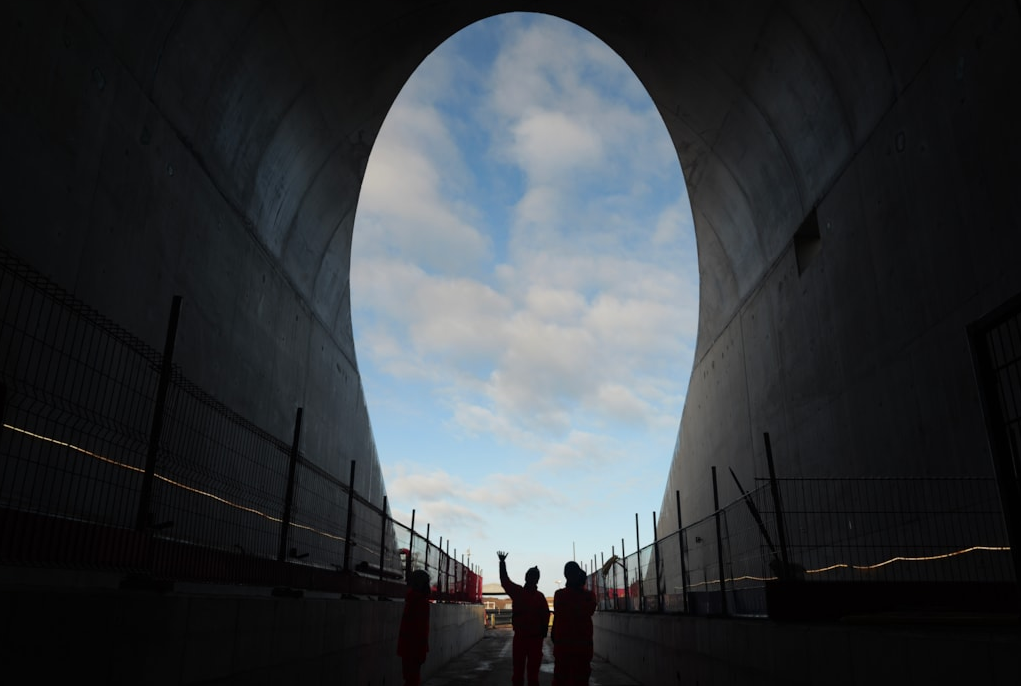
When high-speed trains enter long tunnels, they generate micro-pressure waves as air is rapidly compressed ahead of the train. In conventional rail tunnels, these pressure changes are negligible. However, at high speeds, they can emerge at the opposite portal as an audible pressure pulse, commonly described as a “sonic boom.”
Porous tunnel portals mitigate this effect by:
Extending the tunnel entrance
Introducing controlled ventilation openings
Allowing gradual pressure equalisation
This design reduces the rate of pressure rise, ensuring that pressure waves dissipate before exiting the tunnel.
Source: mediacentre.hs2.org.uk
Want to read more like this story?

Quiet Power: How HS2 Combats Sonic Booms with Precision Engineering
Apr, 30, 2025 | NewsHigh-speed rail systems face a peculiar challenge when trains enter tunnels at extreme velocities—w...
Final design of HS2 Chiltern Tunnel’s North Portal revealed
Mar, 24, 2023 | NewsHigh Speed 2 (HS2) revealed the final designs of Chiltern Tunnel’s North Portal on Tuesday, March 2...

Longest HS2 tunnel structurally complete
Jan, 19, 2026 | NewsHS2 Ltd has confirmed the completion of civil engineering works on its longest tunnel to date, mark...

From Blueprint to Reality: HS2 Achieves Historic Tunneling Milestone
Mar, 13, 2025 | NewsThe HS2 project has reached a significant milestone with the completion of the first deep twin-bore...

The Longest Underwater Tunnel
Jul, 13, 2015 | NewsThe underwater tunnel is a huge project with a cost at around 36 billion US dollars, with a length t...

HS2 Northolt Tunnel: Celebrating the Halfway Mark
Jul, 23, 2024 | NewsHS2's Northolt Tunnel project has reached an impressive milestone, with half of the 8.4-mile twin-b...

HS2’s Northolt Tunnel Reaches Breakthrough After 14 Months of Continuous Excavation
Jul, 04, 2025 | NewsThe excavation of the 8.4-mile Northolt Tunnel under London marks a pivotal achievement in the HS2...
Banihal-Katra rail link: India's longest escape tunnel completed
Dec, 21, 2022 | NewsIndia’s longest escape tunnel, which is 12.89 km long constructed on the 111km under-construction B...

Rapid progress marked on 2.7 km HS2’s longest green tunnel
Dec, 09, 2025 | NewsThe next phase of HS2’s longest green tunnel advanced this week with the realignment of the B4525 n...
Trending

Taipei 101’s impressive tuned mass damper

Characteristics of Load Bearing Masonry Construction

Understanding the Carola Bridge Collapse: Expert Insights

This powder offers an innovative solution to water purification

Dutch greenhouses have revolutionized modern farming

Formwork failure causes roof slab collapse in Limassol construction site

