
HS2 lifts first major beams for Birmingham Curzon Street station

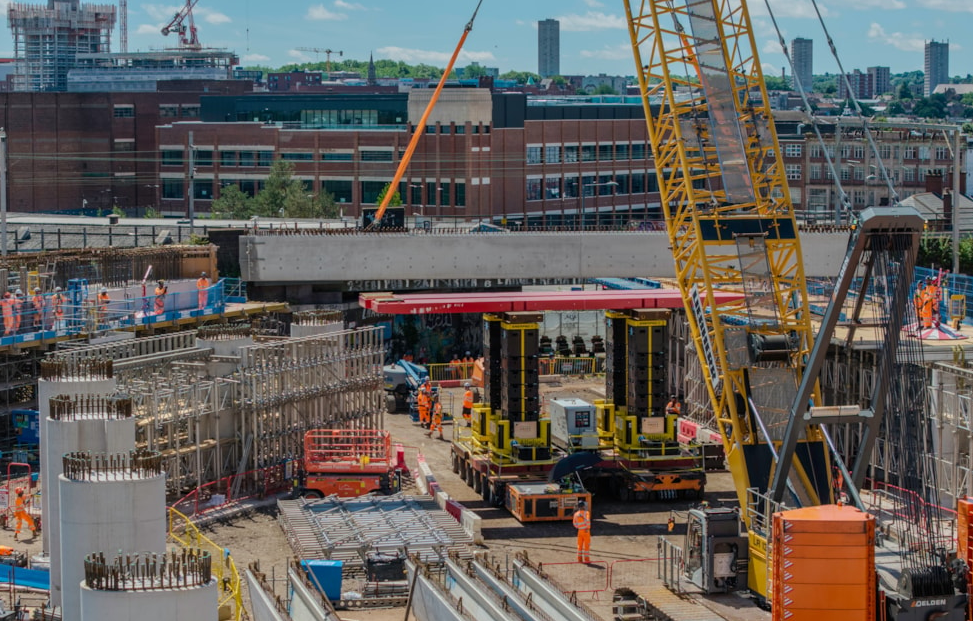
Sources: mediacentre.hs2.org.uk, bbc.com
Want to read more like this story?

Taipei 101’s impressive tuned mass damper
Apr, 03, 2024 | NewsTaiwan was struck on Wednesday, April 3, 2024, by the most powerful earthquake it has experienced i...

Characteristics of Load Bearing Masonry Construction
May, 23, 2019 | NewsLoad bearing masonry construction is a building technique in which wall elements are used as the fra...

Understanding the Carola Bridge Collapse: Expert Insights
Dec, 30, 2024 | NewsThe sudden collapse of the Carola Bridge in Dresden on September 11, 2024, highlights the critical...

This powder offers an innovative solution to water purification
Aug, 11, 2017 | NewsA small Japanese company has developed a special powder that could improve water quality in developi...

Dutch greenhouses have revolutionized modern farming
Feb, 06, 2018 | NewsAt optimal growing conditions, each acre in the greenhouse yields as much lettuce as 10 outdoor acr...

The Billion-Dollar Airport Boom: 2025 Megaprojects Shaping the Skies
Jan, 14, 2025 | NewsAs air travel rebounds and infrastructure demands rise, U.S. airports are undergoing massive transf...

AI-Powered Bridge Monitoring: Detecting Structural Failures Before They Happen
Feb, 10, 2025 | NewsBridges are critical components of transportation networks, yet their maintenance often relies on r...

Transatlantic Tunnel: A Bold Vision or an Impossible Dream?
Mar, 04, 2025 | NewsImagine traveling from New York to London in just 54 minutes—a journey that currently takes over se...

Foundations and structural design of the Torre Rise Supertall Tower: Construction progress in images
Mar, 09, 2026 | NewsConstruction of the Torre Rise skyscraper in Monterrey has reached a major milestone, with the stru...
Trending


Nairobi’s 22-Storey collapse turns fatal as construction failures continue to repeat

Solar Farms and Wind Turbines Tested and Failed by Storm Darragh

Deck failure creates large hole in Quebec bridge

$4.7 billion contract awarded for the construction of Neom’s artificial lake

Formwork failure causes roof slab collapse in Limassol construction site

