
321 deaths linked to 111 building collapses in Nigeria between 2015 and 2025

Nigeria recorded 111 validated building-collapse incidents between 2015 and 2025, resulting in 321 deaths and 344 injuries, according to figures cited in a 2026 engineering study as concerns continue over construction quality, supervision and regulatory enforcement across the country.
The dataset represents an average of around 32 deaths and 34 injuries per year over the period. Separate Federal Government figures indicate that more than 650 building collapses have been recorded nationwide since 1974, causing over 1,600 deaths.
Lagos accounts for more than half of the recorded incidents, with major disasters in 2021, 2022 and 2024, but collapses have continued across several parts of the country and have affected residential, commercial and educational buildings. Recent cases include the partial collapse of a five-storey building under construction on Durban Street in Wuse II, Abuja, on 17 October 2026, where one worker was injured and evacuated to hospital.
The economic impact of engineering and fire-related failures is also substantial. Dr Iliyasu Gashinbaki, President and Chairman of the Governing Council of the Chartered Institute of Forensics and Certified Fraud Investigators of Nigeria, put losses from fire-related incidents between 2022 and 2025 at an estimated N4.6 trillion in property, goods and business assets, equivalent to approximately N1.15 trillion per year. He distinguished those losses from building-collapse fatalities, noting that the figures came from separate analyses.
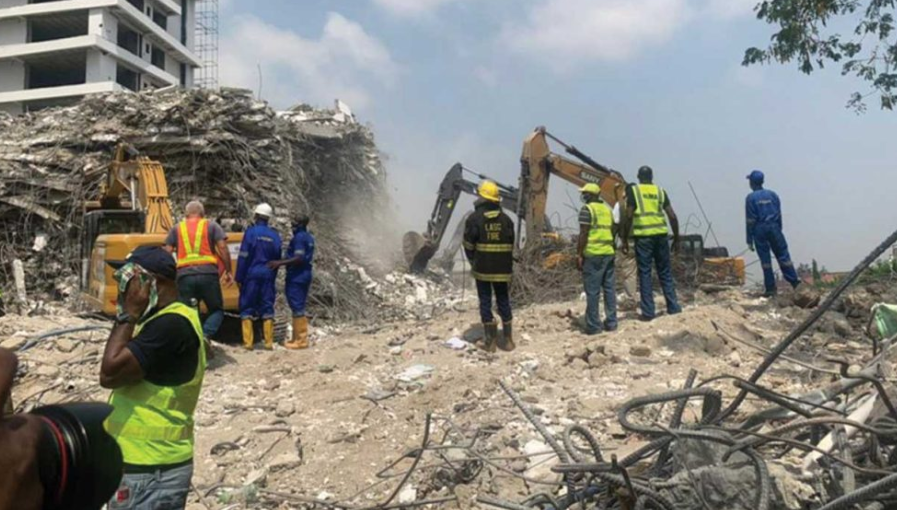
Recurring failures have been linked by industry experts to a combination of substandard construction materials, poor-quality blocks, poor workmanship, inadequate professional supervision and cost-cutting during construction. Weak enforcement of existing regulations has also been repeatedly identified as a contributing concern.
The response is now shifting towards greater use of forensic engineering. CIFCFIN, together with the Council for the Regulation of Engineering in Nigeria and the Nigeria Building and Road Research Institute, has established the Certified Engineering Failure Forensic Investigation initiative, whose first cohort of professionals has now been inducted.
The programme is intended to bring engineering, forensic science, regulation, law and criminal investigation together when serious failures occur. The objective is to preserve technical evidence, identify possible negligence or malpractice and establish clearer accountability rather than allowing investigations to end with emergency repairs, abandoned projects or official silence.
Proposed measures also include tighter regulation of building-material production and more physical inspection during construction. The Standards Organisation of Nigeria has been urged to move beyond paper-based certification towards mandatory certification of block manufacturers, regular market sampling and laboratory testing, and tighter checks on imported building materials, while local authorities have been asked to license and routinely inspect block-moulding businesses and withdraw licences from repeat offenders.
Another recommendation is to require inspections at critical stages such as foundation laying, lintel installation and roofing rather than relying primarily on submitted plans and documentation. Experts have also called for criminal and civil liability to extend to manufacturers, suppliers, contractors and professionals found culpable, alongside whistleblower protection and digital permit platforms through which the public can monitor approval and inspection records.
The challenge is therefore not limited to structural design. Material quality, construction execution, inspection, professional responsibility and enforcement all influence whether a building reaches completion with an adequate level of safety.
The scale of Nigeria's recorded collapses shows why preventing future failures will require both stronger technical control during construction and more rigorous investigation after incidents occur.
Further related information is available here.
Sources: dailytrust.com, thestar.ng, platformtimes.com.ng, guardian.ng
Want to read more like this story?

Nairobi’s 22-Storey collapse turns fatal as construction failures continue to repeat
Mar, 18, 2026 | NewsA partial structural collapse at a 22-storey building under construction in Westlands, Nairobi, has...

Five killed as Abuja building collapse exposes another regulatory failure
May, 17, 2026 | NewsA three-storey building under construction collapsed near Gudu Market in Abuja, killing five people...

Fatal building collapses in Johannesburg and Giza trigger urgent safety investigations
Dec, 28, 2025 | NewsA formal investigation has been launched following the collapse of a double-storey building under c...

Engineering and regulatory failures linked to Germasogeia, Limassol incident
Apr, 12, 2026 | NewsThe collapse of a two-storey residential building in Germasogeia, which resulted in two fatalities,...

Lagos' Building Collapse Epidemic: Who Is to Blame?
Mar, 17, 2025 | NewsYet again, Lagos has witnessed another devastating building collapse—this time in Lekki Phase 1, wh...
271 building collapse recorded in Nigeria the last 10 years
Jan, 20, 2023 | NewsAccording to documents from the Building Collapse Prevention Guild, 271 buildings have collapsed in...

Structures Falling, Standards Failing: The Governor Who Said ‘Enough’
Apr, 02, 2025 | NewsFor decades, Nigeria has battled a quiet epidemic—construction failures. These aren’t isolated even...

Building collapse south of Indianapolis: 2 workers injured
Apr, 04, 2022 | NewsA building under construction collapsed, injuring at least two construction workers, authorities sa...

Structural Failure in Yobe: One Dead, Several Injured in School Collapse
Feb, 20, 2025 | NewsA devastating incident struck Government Girls Science and Technical College in Potiskum, Yobe Stat...
Trending

Taipei 101’s impressive tuned mass damper

Characteristics of Load Bearing Masonry Construction

Understanding the Carola Bridge Collapse: Expert Insights

This powder offers an innovative solution to water purification

Dutch greenhouses have revolutionized modern farming

Formwork failure causes roof slab collapse in Limassol construction site

